
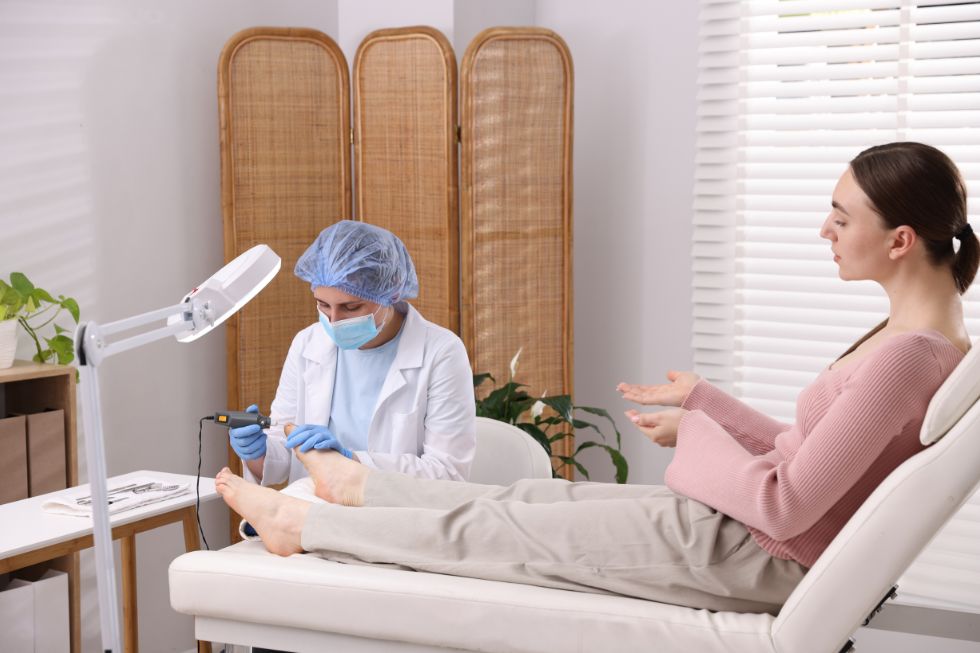
Booking a first appointment for an ingrown toenail can feel like stepping into the unknown. What actually happens? What will it cost? Will it hurt? For anyone who has been putting off treatment simply because the process feels unclear, that uncertainty is often the biggest barrier of all.
The good news is that a first visit for an ingrown toenail follows a clear, predictable path, from booking through to aftercare. By the end of this article, you’ll know how a deposit secures your appointment, what happens when you arrive, how the consultation works, and what to expect on your invoice. You can also see how the process works and book online whenever you’re ready.
Booking and securing your appointment
The first step is choosing the right appointment. If it’s not obvious whether the toenail needs conservative care, bracing, or a minor procedure, booking a general assessment is the simplest option. The podiatrist examines the toenail first and recommends the most appropriate treatment before anything proceeds.
Once a time slot is chosen, a deposit is required to confirm the booking. This is standard practice for specialised appointments and protects time set aside exclusively for one patient at a time.
Arriving for your appointment
There’s no waiting room in the traditional sense. As a small, private, home-based practice, secure parking is available inside the gate, and patients are asked to wait in the driveway if they arrive early.. The clinic is based in Lyttelton Manor, Centurion, roughly five minutes from the N1 via the Botha off-ramp, making it accessible for patients from Irene, Waterkloof, Erasmuskloof and the wider Pretoria East area.
Because reception is not staffed by a dedicate and separate person, WhatsApp messaging is generally the best way to reach the practice with any questions.
The consultation and assessment
This is where clarity replaces guesswork. The podiatrist assesses the toenail, discusses what’s causing the problem, and explains the recommended treatment options before anything is carried out. Nothing proceeds without that conversation first.
Treatment depends on how severe and how recurrent the ingrown toenail is. You can explore the full range of treatment options in more detail, but broadly:
- Conservative care suits mild cases, involving nail trimming, pressure relief and home-care guidance
- Toenail bracing is a non-surgical option for curved or recurring nails, gradually flattening the curve and reducing pressure over time
- A minor procedure may be recommended for severe or repeatedly recurring toenails, performed under local anaesthetic to permanently remove the problematic nail edge
What happens after treatment
Once treatment is complete, patients receive clear aftercare guidance and, where relevant, follow-up support. Fees and any agreed extras are finalised on the day, and an invoice is issued that can be submitted to medical aid for possible reimbursement. There are no hidden add-ons; anything beyond the standard treatment is discussed and agreed upfront.
Most people are able to resume normal daily activities the same day, with high-intensity activity avoided for around two weeks if a procedure was performed.
Nothing left to guess
A first visit doesn’t need to be a source of anxiety. From the deposit that secures the booking, to the driveway parking, to the invoice at the end, every step is designed to be predictable rather than surprising. Understanding what’s ahead often makes the decision to finally book far easier than the toenail pain itself.
If you’re ready to stop putting it off, book an assessment with Ingrown Toenail Solutions in Lyttelton Manor, Centurion. Message the practice on WhatsApp at 078 060 6744, or book your appointment online to get a date on the calendar.